- Role, responsibilities and career paths of a Business Analyst across IT services, product and consulting organisations
- Introduction to the IIBA® BABOK® Guide and its six knowledge areas
- Business Analysis Planning and Monitoring: approach selection, stakeholder engagement planning and governance
- Elicitation and Collaboration: preparing, conducting and confirming elicitation results
- Requirements Life Cycle Management: tracing, maintaining, prioritising and approving requirements
- Strategy Analysis: current state, future state, risk assessment and change strategy
- Requirements Analysis and Design Definition: specifying, modelling, verifying and validating requirements
- Solution Evaluation: measuring solution performance and recommending actions to increase business value
- Underlying competencies, business analysis techniques and perspectives (Agile, Business Intelligence, Information Technology, Business Architecture, Business Process Management)
- Difference between a Business Analyst, Product Owner, Product Manager, Data Analyst and Systems Analyst

Business Analyst Course in Chennai
Business Analyst Course in Chennai: Master BABOK® Standards, SQL, Power BI & Agile Projects
Bridge the gap between business objectives and technology solutions. Acquire practical experience with industry-standard tools, master requirement engineering, and prepare for globally recognized IIBA® certifications through our mentor-led Business Analyst Course in Chennai.
- BABOK®
- SQL
- Power BI
- Agile
- JIRA
- 120+ Hours
- Placement Support

Live Dashboards
Placement Support
Career Outlook
Why Pursue a Business Analyst Career in Chennai
Chennai has evolved into one of India's most diversified technology destinations, combining global capability centres, engineering services, product companies and enterprise IT delivery hubs within a single ecosystem. This mix creates sustained demand for professionals who can translate business intent into clear, testable solution requirements.
Business analysts sit at the centre of this delivery model. They align stakeholders, define scope, model processes, validate data and safeguard business value from discovery through release. Because the role is domain-driven rather than programming-driven, it remains one of the most accessible high-growth career paths for graduates as well as professionals moving in from non-IT backgrounds.
The city's industry spread also means your experience compounds quickly. A business analyst in Chennai can move across banking platforms, manufacturing systems, enterprise products and healthcare technology without relocating, building the multi-domain profile that senior analysis and product roles demand.

Fintech & Banking
Chennai hosts large banking technology centres, payment platforms and insurance operations where business analysts define regulatory, onboarding, lending and reconciliation requirements.
Automotive & Manufacturing
As a major automotive and manufacturing hub, the city needs analysts who can map supply chain, production planning, dealer management and ERP-driven processes.
SaaS & Enterprise Product Management
A growing product and SaaS ecosystem creates demand for analysts who work alongside product owners on discovery, backlog refinement and feature analytics.
Healthcare IT
Hospital groups, diagnostics chains and health technology companies require analysts who understand clinical workflows, patient data privacy and interoperability.
Practical Experience
Hands-On Industry Projects
Every learner delivers three complete engagements with the same artefacts, reviews and sign-offs expected in a professional delivery team.
- 1 Discovery and stakeholder analysis
- 2 AS-IS journey mapping and data profiling
- 3 Requirement definition and backlog creation
- 4 Wireframes and solution walkthrough
- 5 Dashboard build and UAT support
Retail & E-Commerce
E-Commerce Conversion Optimization
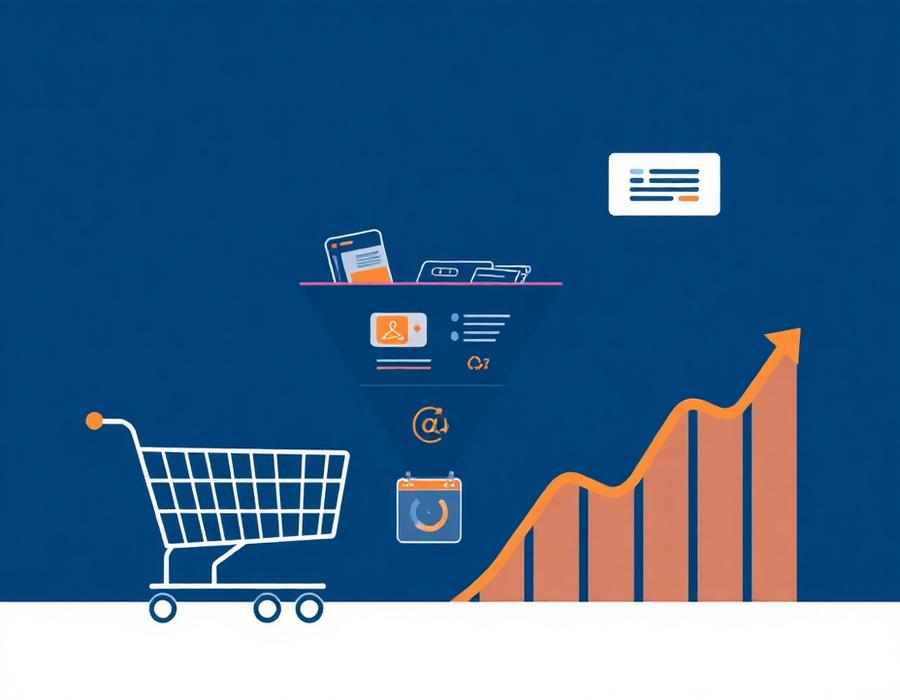
Work as the business analyst for an online retail platform that is losing customers between product discovery and payment confirmation. You will analyse the existing checkout journey, elicit requirements from marketing, merchandising, payments and engineering stakeholders, quantify drop-off using SQL on transactional data, and define a prioritised backlog of improvements. The engagement covers AS-IS journey mapping, funnel analysis, hypothesis definition for A/B experiments, requirement documentation for a simplified checkout, and a Power BI dashboard that tracks conversion, average order value and cart abandonment after release.
Skills Used
- Stakeholder elicitation and workshop facilitation
- AS-IS and TO-BE journey mapping
- Funnel and drop-off analysis using SQL
- Requirement prioritisation with MoSCoW
- User story writing with acceptance criteria
- Dashboard and KPI definition
Deliverables
- Business Requirement Document for checkout optimisation
- AS-IS and TO-BE process flows with swimlanes
- Prioritised product backlog with epics and user stories
- Conversion funnel analysis with supporting SQL queries
- Wireframes for the revised checkout flow
- Power BI conversion performance dashboard
- UAT scenarios and sign-off checklist
Technologies
- 1 Regulatory and process discovery
- 2 Stakeholder workshops and requirement elicitation
- 3 Process modelling and business rule definition
- 4 Integration specification and traceability
- 5 UAT execution and post-release reporting
Banking & Fintech
Digital Banking KYC Onboarding
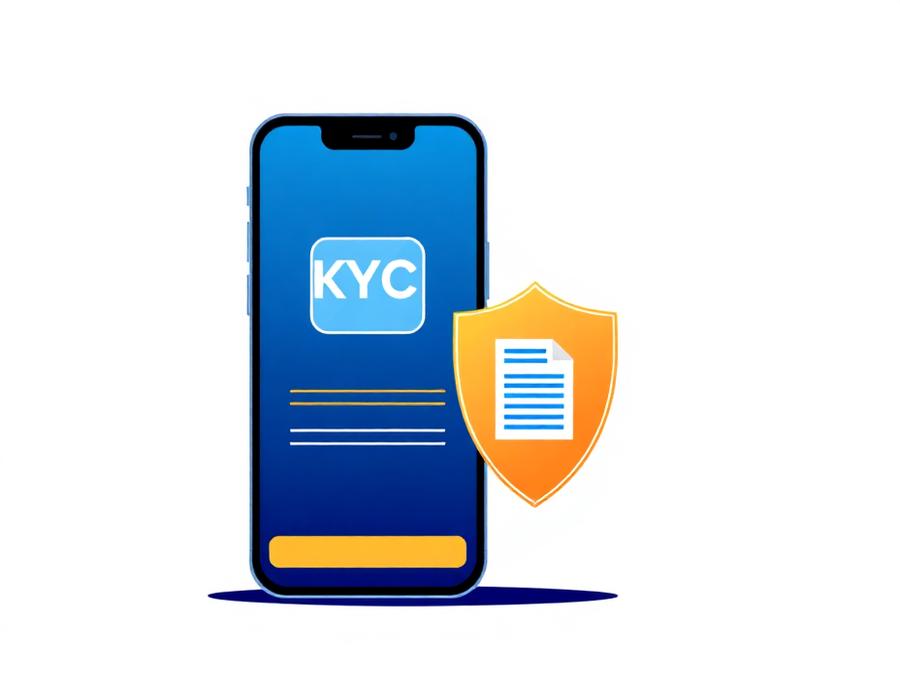
Take ownership of the requirements for a digital customer onboarding journey at a retail bank, where account opening is delayed by manual document verification and repeated compliance rework. You will map the regulatory KYC process end to end, capture requirements from compliance, risk, operations and technology stakeholders, model the verification workflow with BPMN, and specify integrations with identity verification and document management services. The engagement includes business rules for risk categorisation, non-functional requirements for security and auditability, and reporting requirements for onboarding turnaround time and rejection reasons.
Skills Used
- Regulatory and compliance requirement analysis
- BPMN process modelling and business rules definition
- Interface and integration requirement specification
- Non-functional requirements for security and audit
- Requirement traceability management
- Defect triage and UAT coordination
Deliverables
- Functional Requirement Specification for the onboarding journey
- BPMN 2.0 workflow for KYC verification and exception handling
- Business rules catalogue with decision tables for risk categorisation
- Requirement Traceability Matrix mapped to test cases
- Interface specification for identity and document verification services
- Onboarding turnaround and rejection analysis report
- UAT test scenarios and go-live readiness checklist
Technologies

- 1 Departmental discovery and current state study
- 2 Requirement documentation and data modelling
- 3 Wireframing and stakeholder validation
- 4 Reporting design and dashboard build
- 5 Phased rollout planning and UAT
Healthcare IT
Hospital Information Management System
Act as the business analyst for a multi-speciality hospital implementing an integrated information management system across outpatient registration, appointment scheduling, inpatient admission, pharmacy, diagnostics and billing. You will run discovery with clinicians, front-desk teams, pharmacists and finance users, document departmental workflows, define role-based access requirements, and specify data models for patient records. The engagement covers master data requirements, interoperability considerations for lab and radiology systems, privacy and consent requirements, and an operational dashboard covering occupancy, appointment adherence and revenue cycle metrics.
Skills Used
- Multi-department discovery and workflow documentation
- Use case and activity diagram modelling
- Data modelling with ER diagrams and data dictionary
- Role-based access and privacy requirement definition
- Master data and interoperability analysis
- Operational reporting and KPI design
Deliverables
- Software Requirement Specification for the hospital information system
- Department-wise process flows and use case specifications
- Entity relationship diagram and data dictionary for patient records
- Role and permission matrix with privacy requirements
- Wireframes for registration, scheduling and billing screens
- Operational Power BI dashboard for occupancy and revenue cycle
- Phased implementation and training plan